Hackathon
SHE - Slush hackathon 1st place
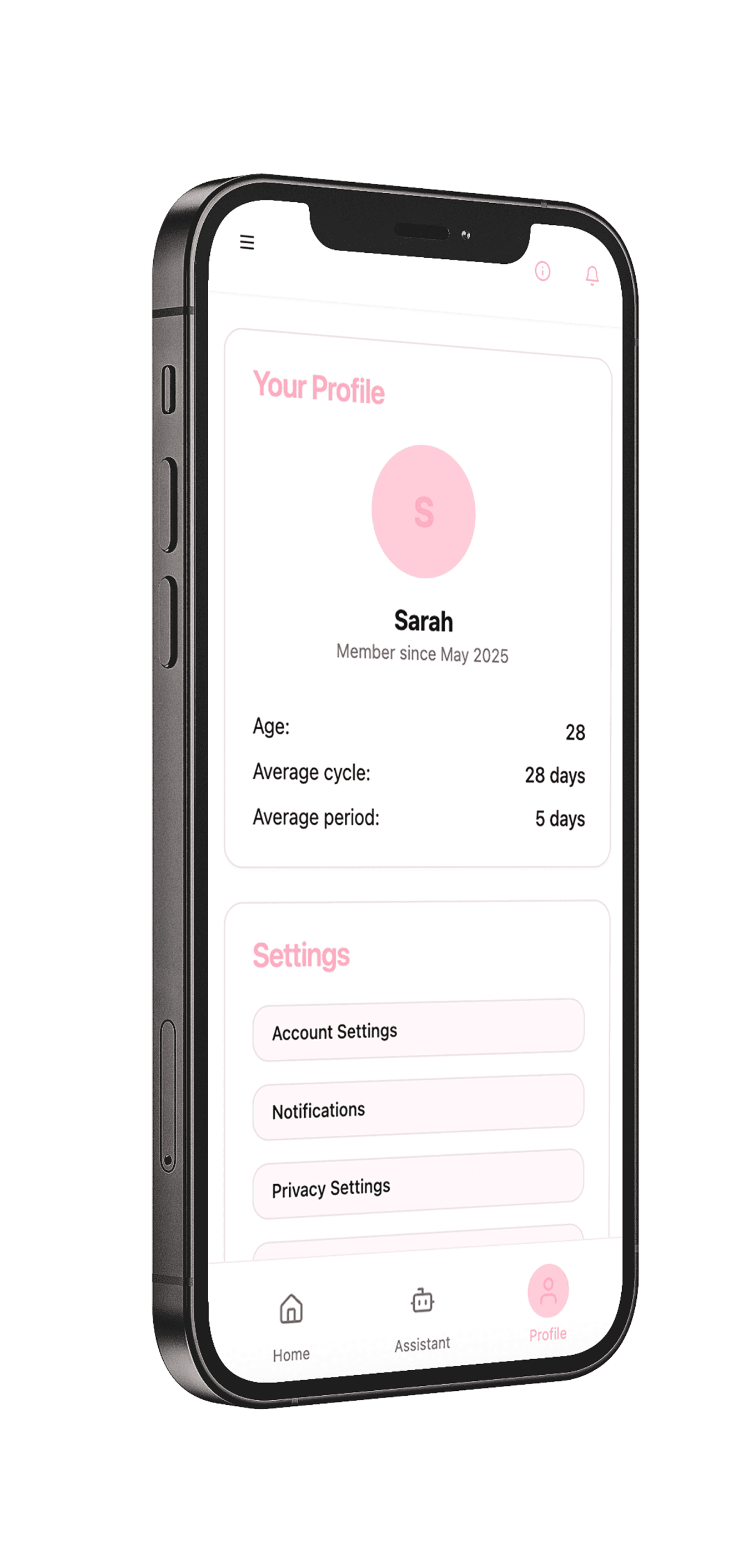
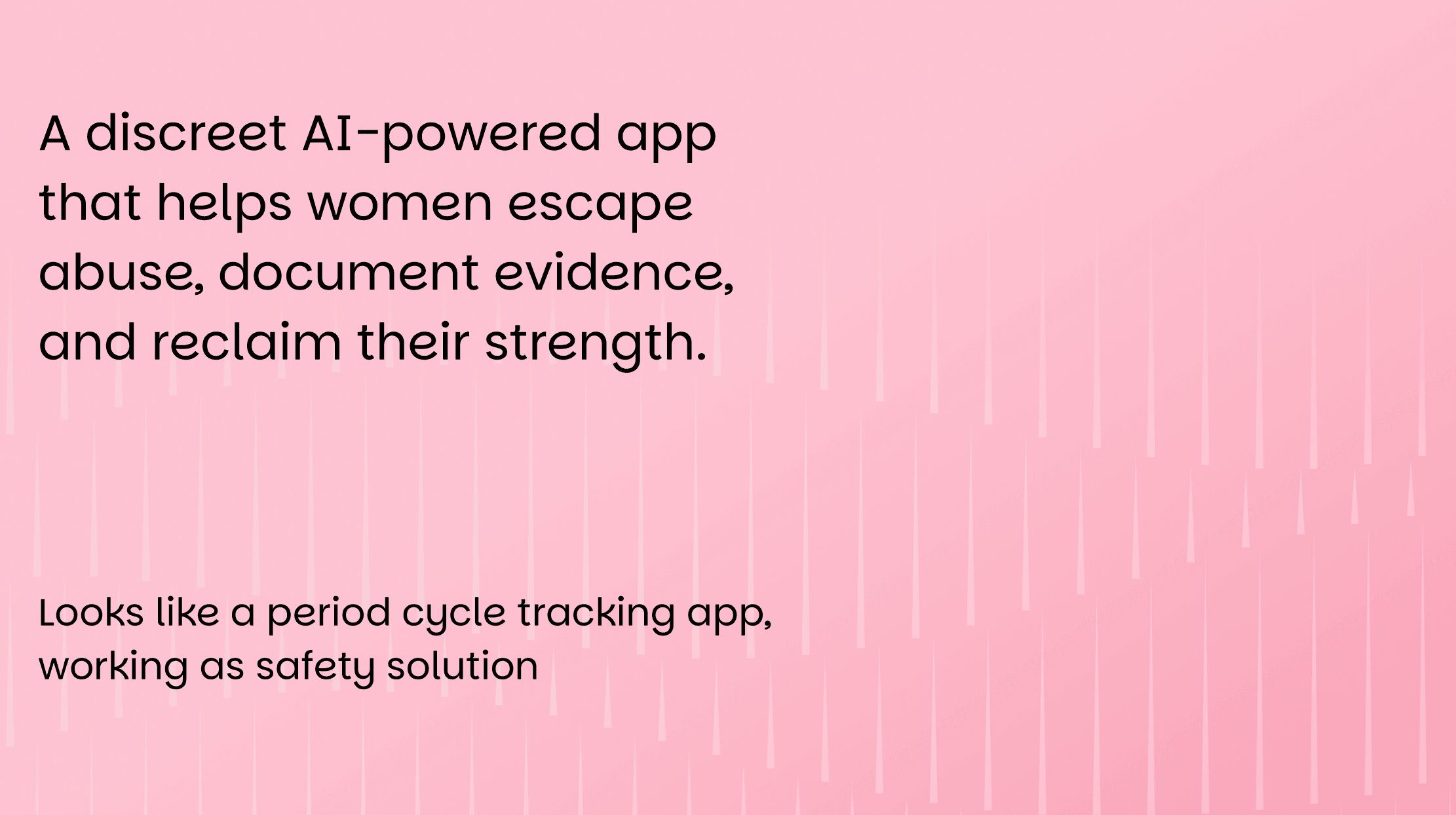
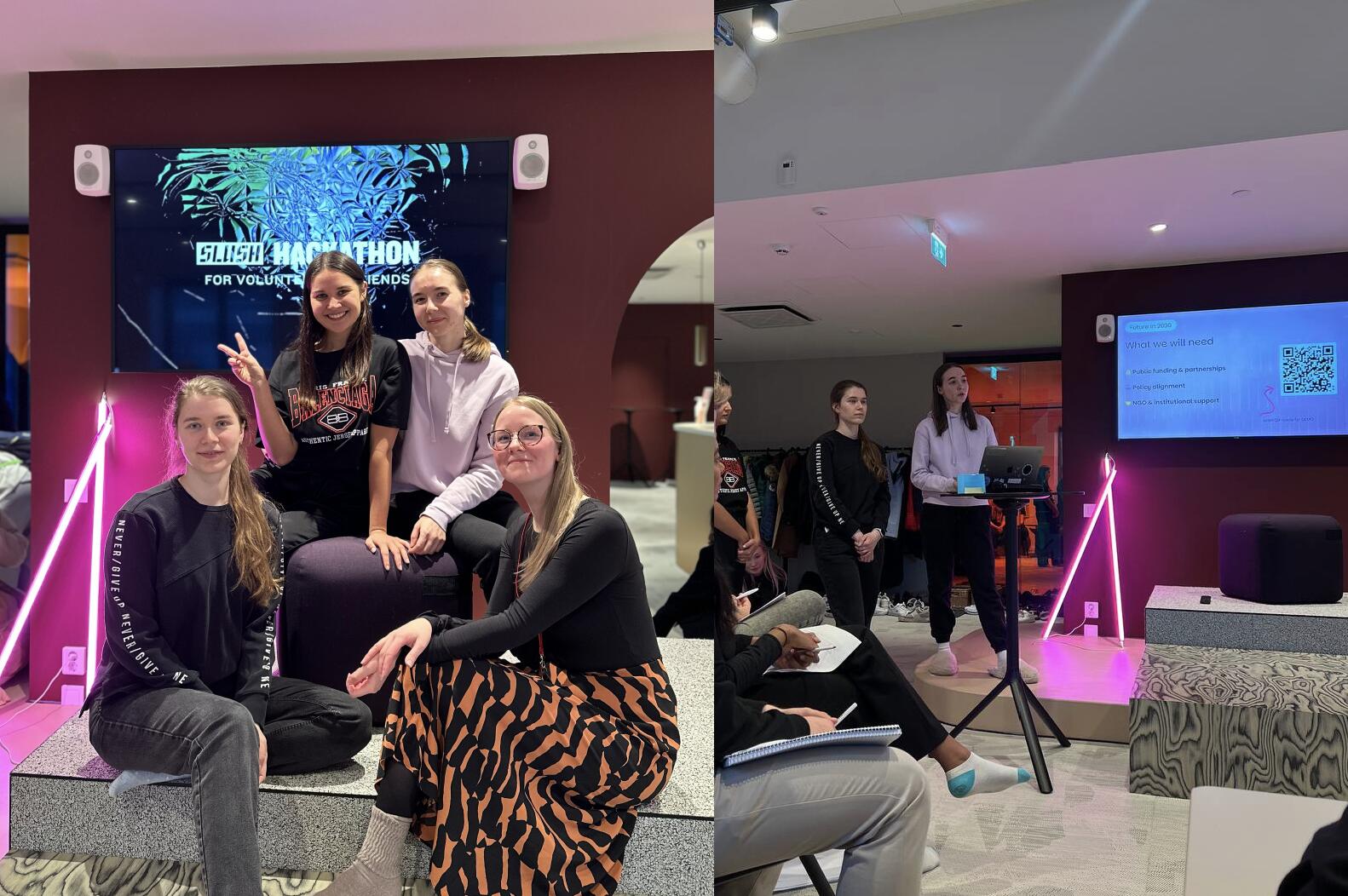
I designed an AI-powered safety app for women experiencing abuse, disguised as a period tracker. I led our team's pitch to win 1st place out of 12 teams at the "Slush Volunteers & Friends" Hackathon. The judges called the pitch "outstanding" and "next-level storytelling."
Results
place winner
1st
tems participated
12
Out of 12 competing teams, S.H.E. took 1st place. The judges highlighted our technical concept, outstanding storytelling, and real-world relevance. I walked away with tickets to the Slush event and an idea worth building further.
My role
I was one of three women on the team, working end-to-end in a single day. I contributed to concept definition and user storytelling, built the pitch deck, and presented on stage. The tight time constraint pushed us to make fast, focused decisions.
Challenge
The challenge was: "How might we use emerging technology for social good in 2030?"
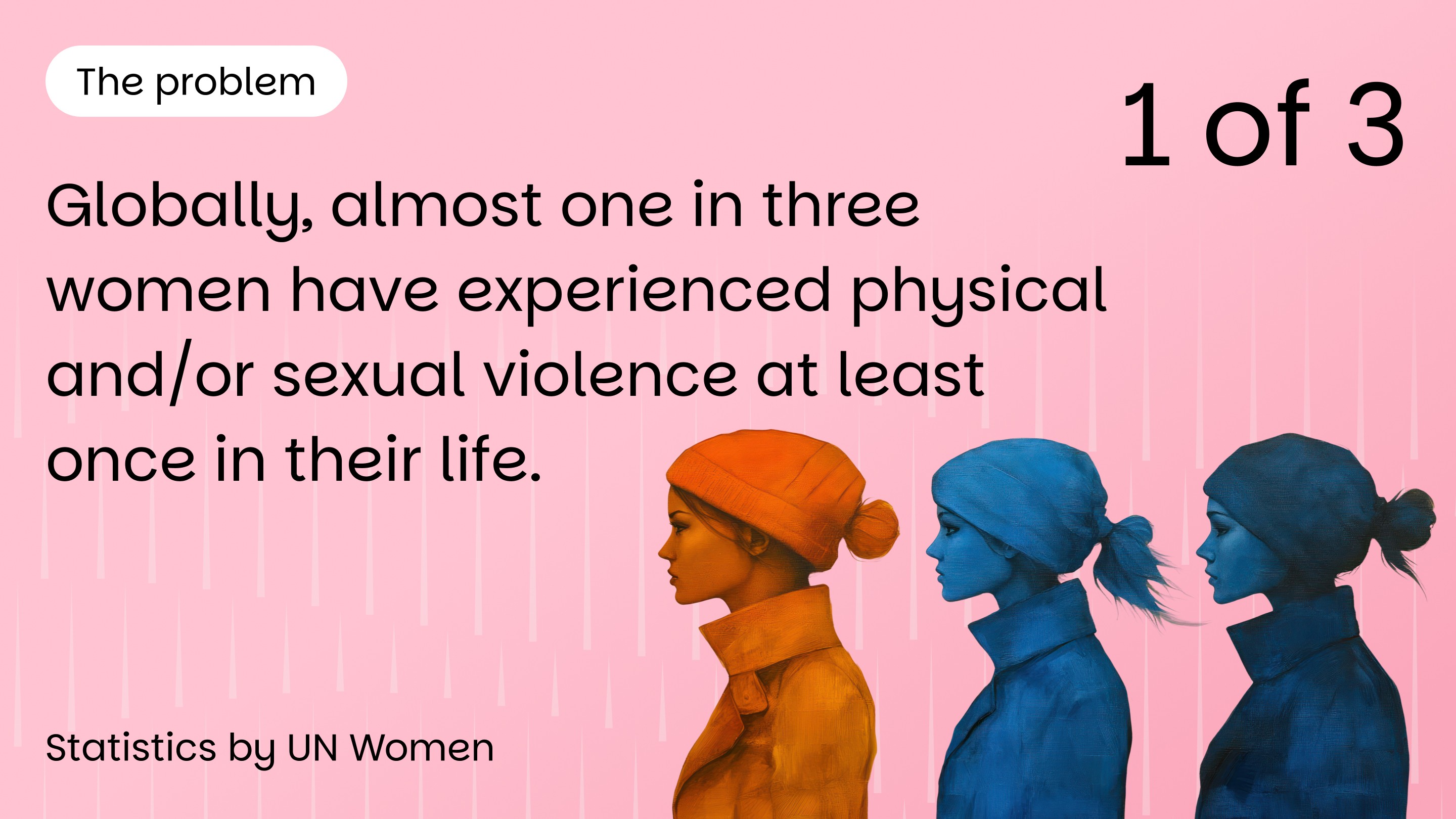
We chose to narrow down the social problem and tackle domestic abuse — a crisis affecting 1 in 3 women globally, yet one that's largely invisible.
The design challenge was real: how do you build something that works while someone is being watched?
How might we use emerging technology for social good in 2030?
women globally
1 of 3
Personas
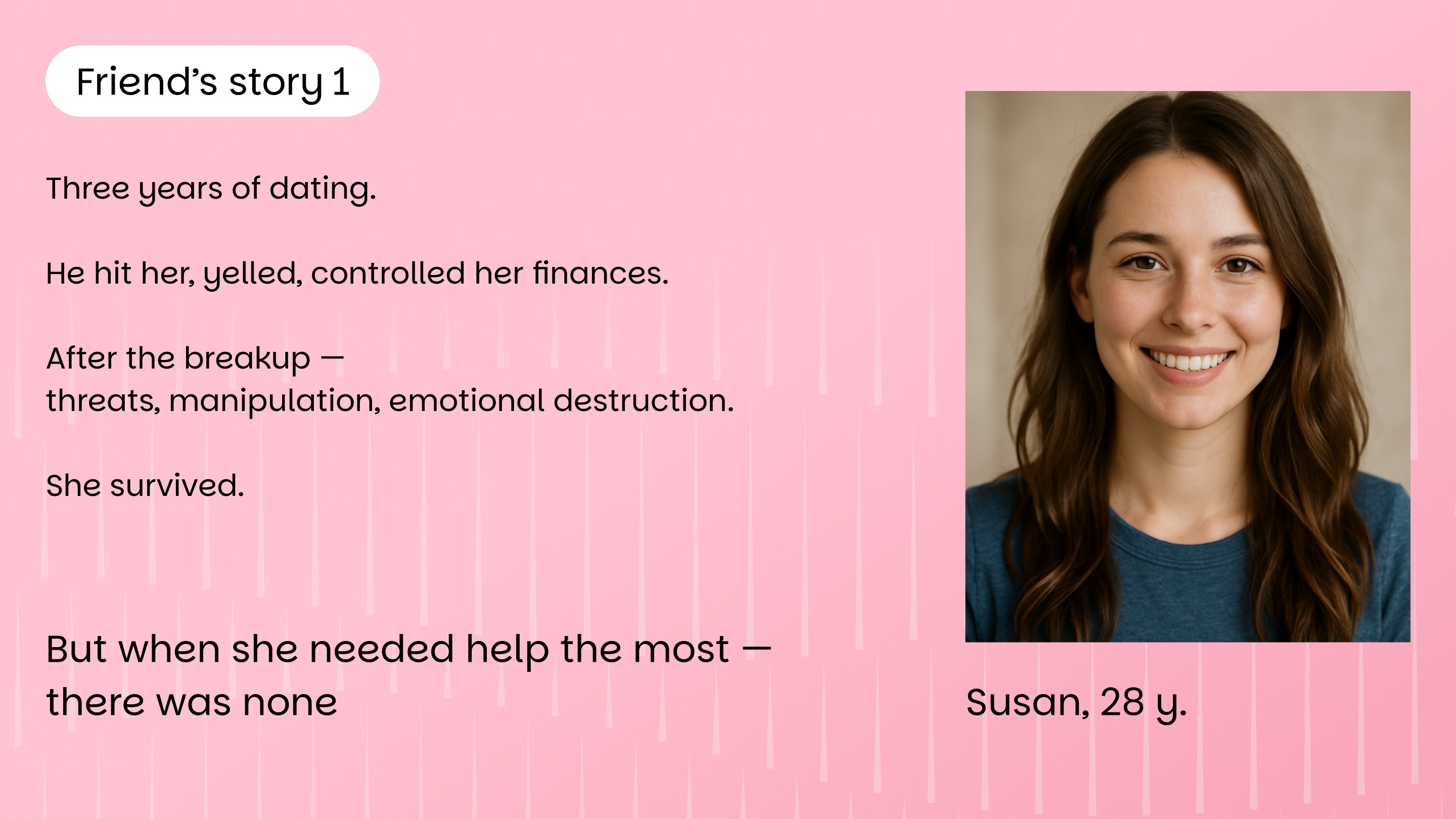
Our personas were grounded in real user stories, collected from friends willing to share their experiences. We anonymised names and used generated portraits to protect identities, while keeping the emotional truth of each story intact.
Through our research, three critical gaps emerged. Women in abusive situations often have no safe place to go, no one to turn to, and no way to call for help — abusers frequently take away phones to cut off access to services. And even when victims do reach out, police rarely open a case without physical evidence.
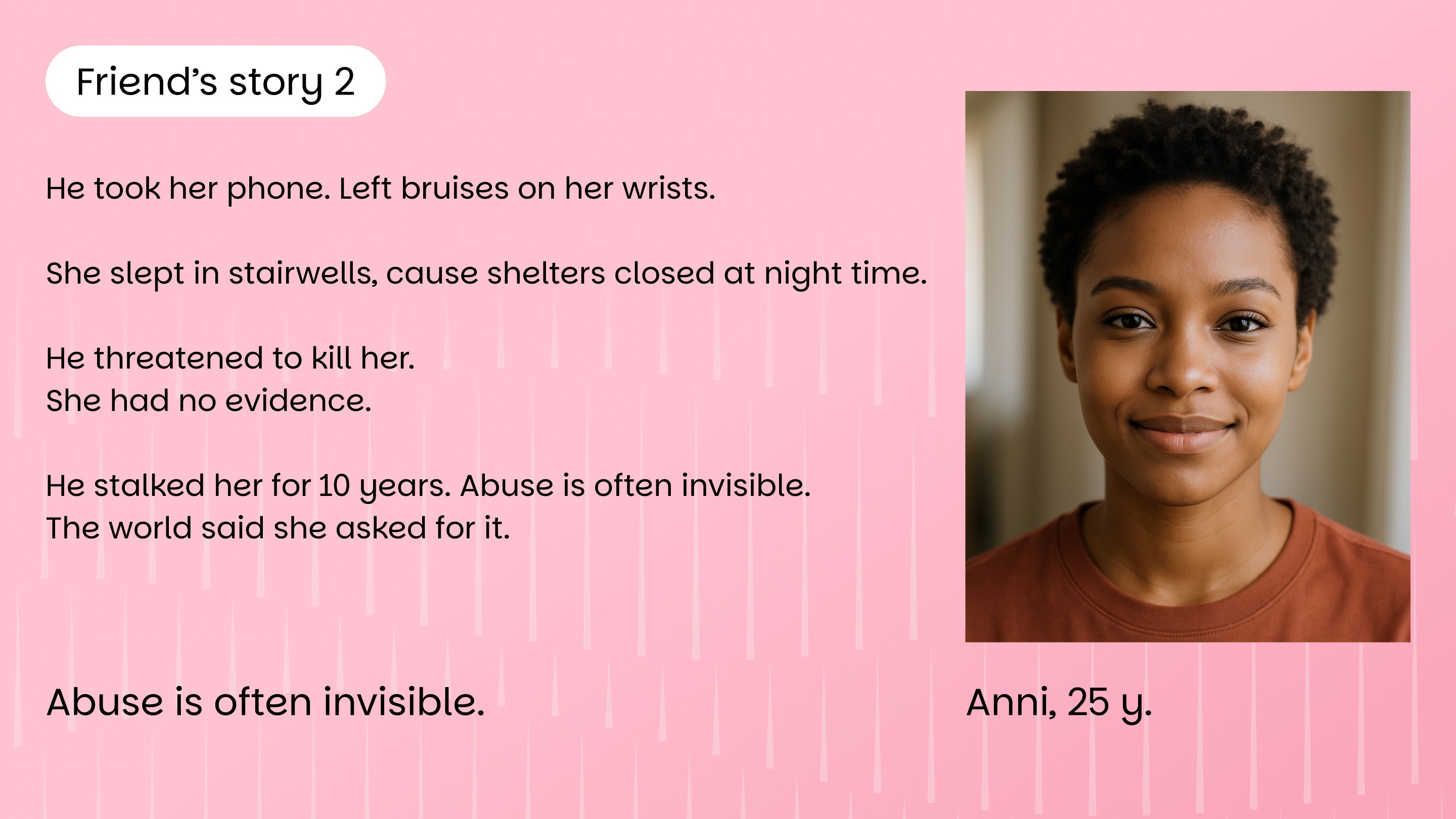
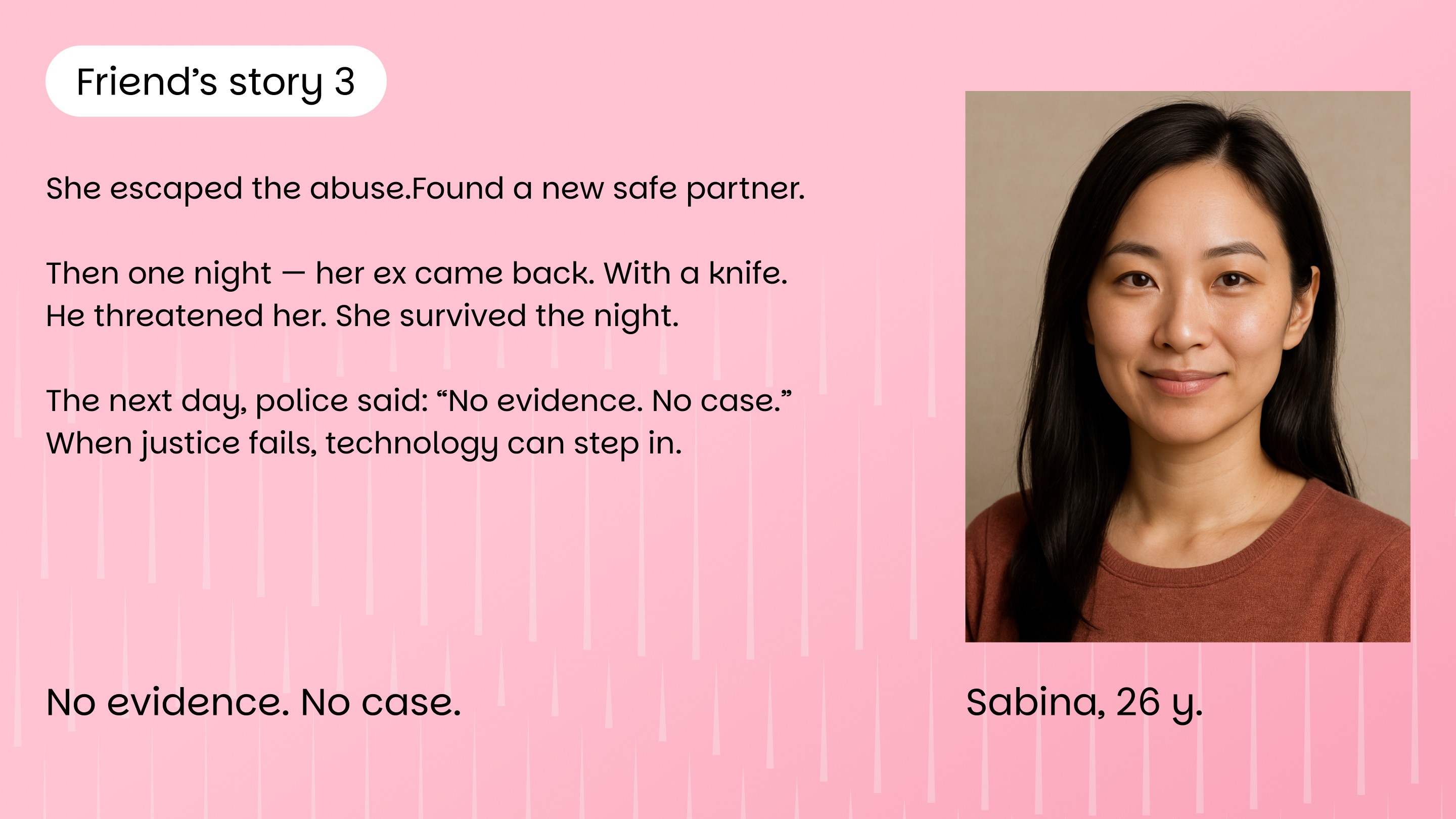
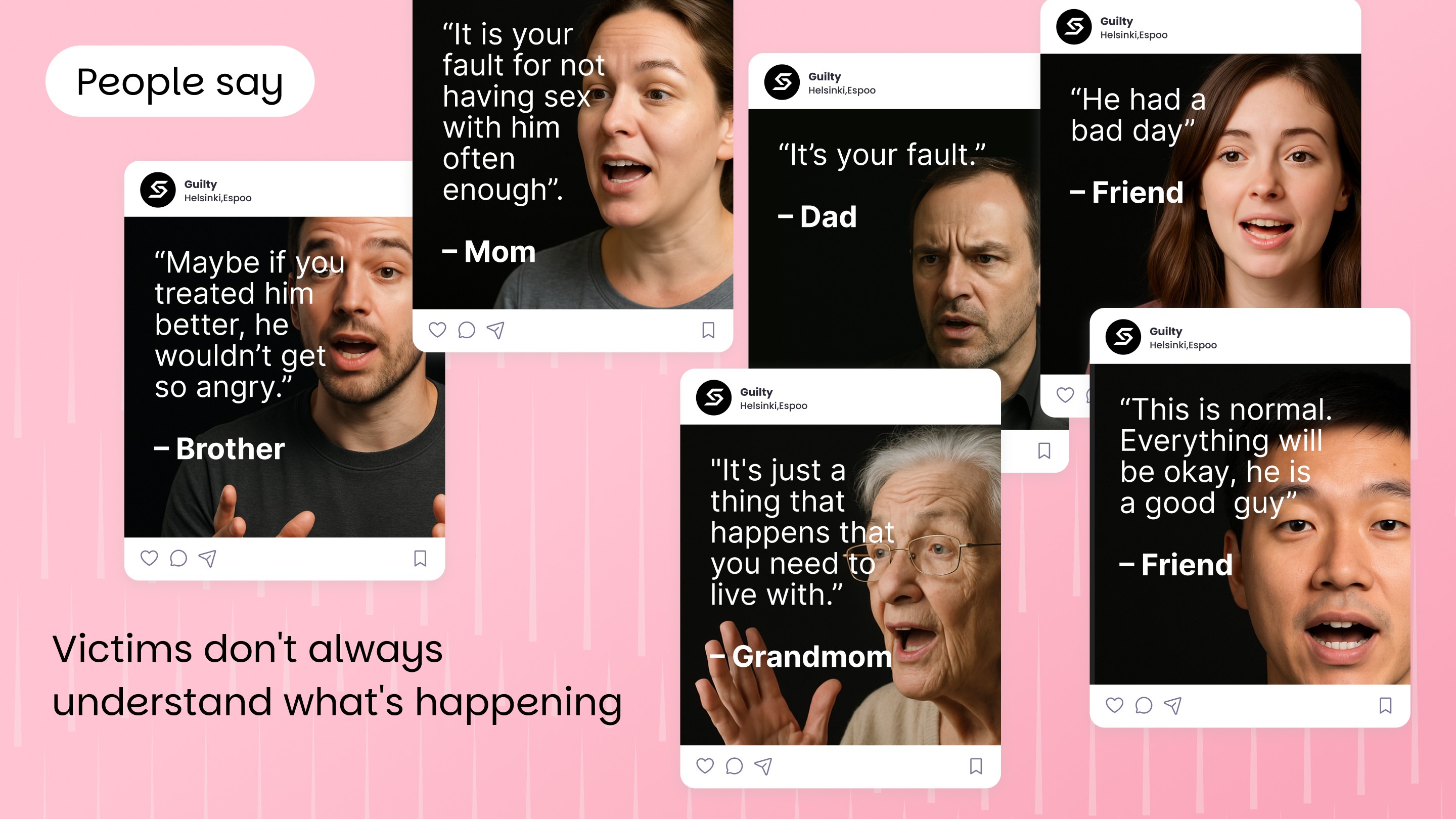
But the second layer of the problem is just as damaging: society itself. Even the closest people — family, friends — tend to dismiss, doubt, or blame the victim. The abuse stays invisible not just because it's hidden, but because too many people choose not to see it, as a result victim believes people around.
Features
From those insights, three features emerged — each one a direct response to a real barrier women face.
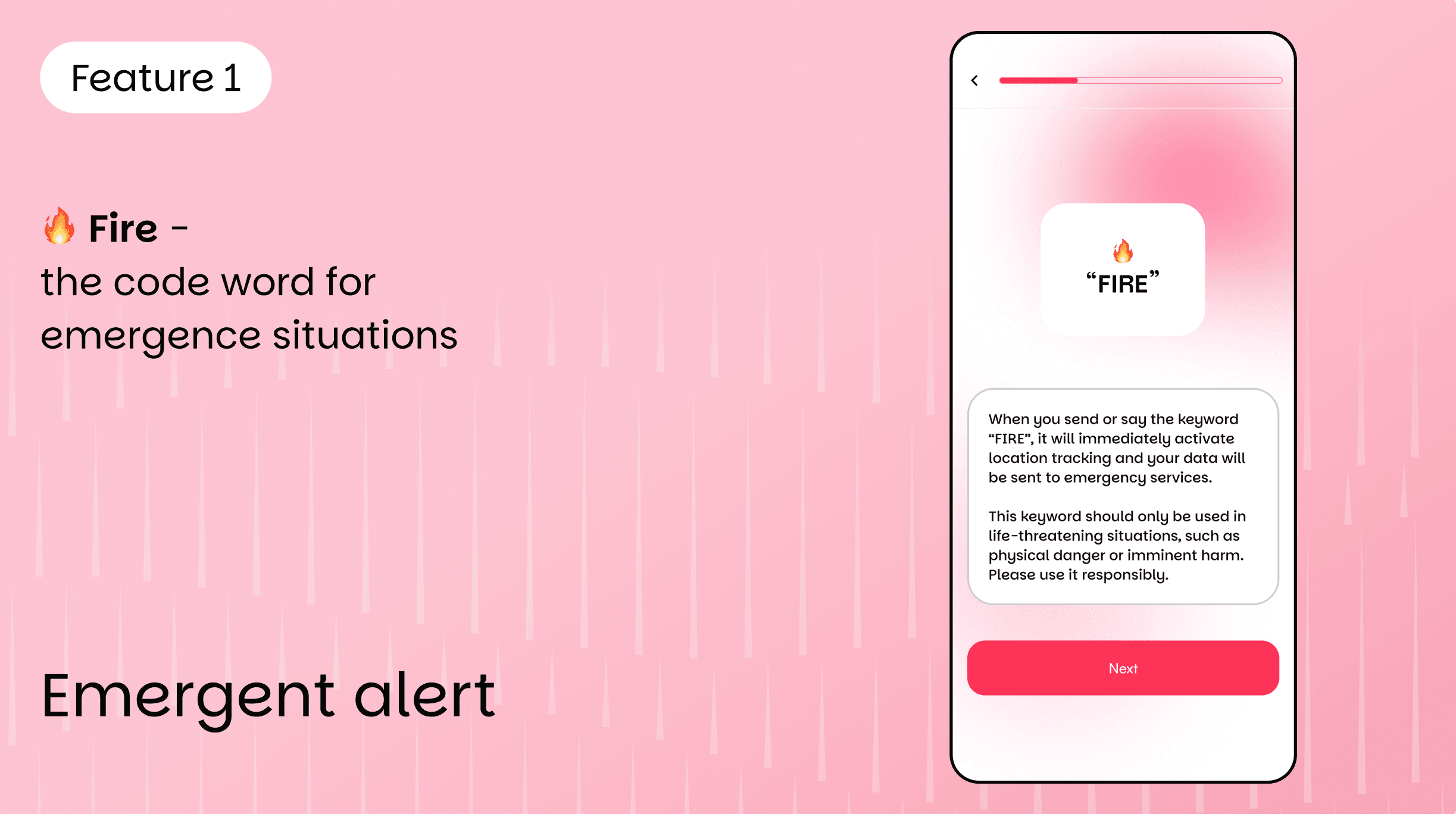
Feature 1: Since an abuser can take away her phone, I focused on a feature that needs nothing but her voice. Saying "Fire" triggers an immediate call to emergency services.
The word itself wasn't random. All three of us on the team were taught by our parents to scream "Fire" in a dangerous situation instead of screaming for help. Because people run towards fire and walk past someone in danger. That childhood lesson became the logic behind the feature.
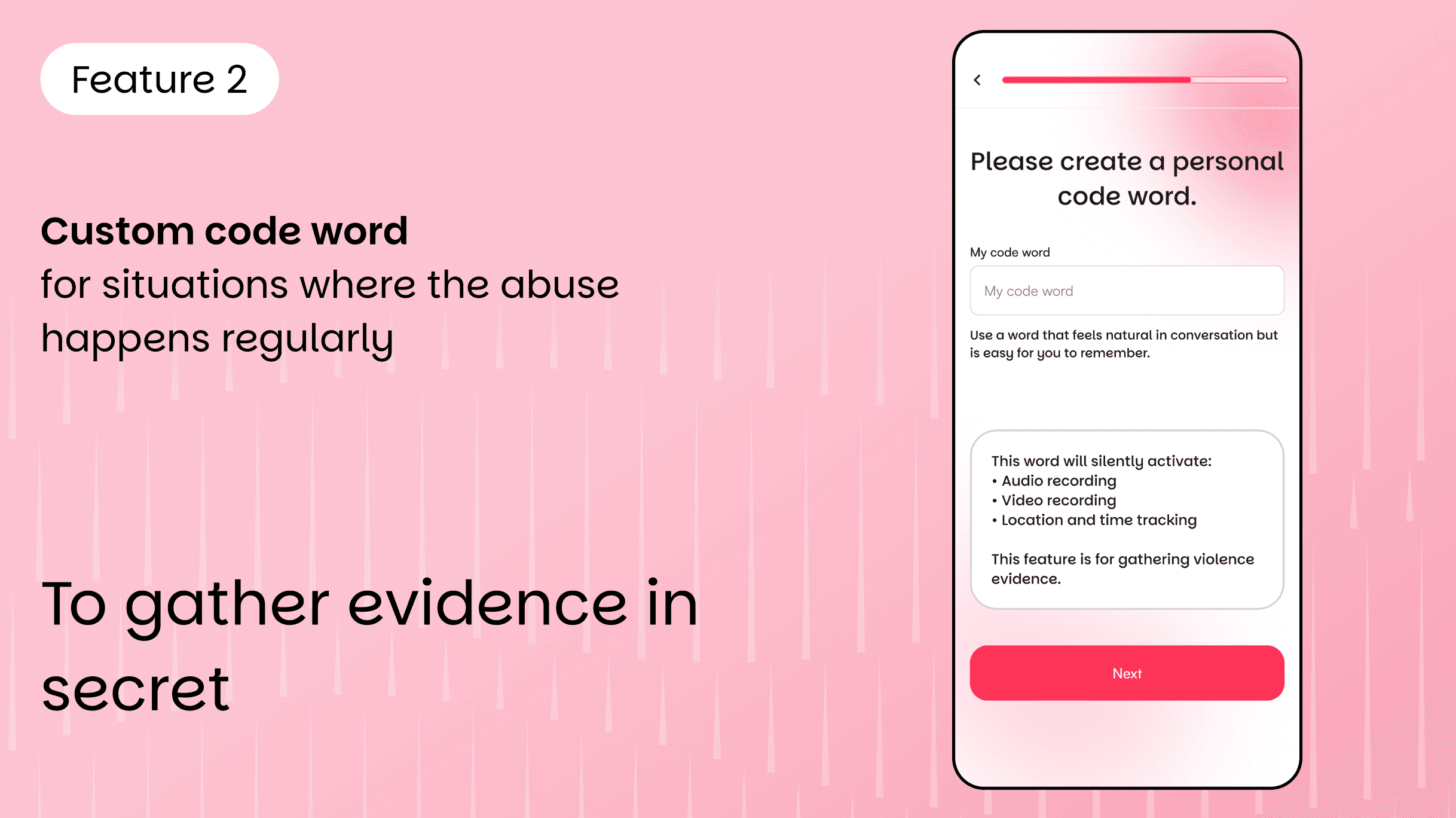
Feature 2: Not every situation is an immediate emergency — sometimes abuse is recurring, and what a victim needs most is evidence. For this, we gave her a custom code word she chooses herself. Something that sounds natural in conversation, something only she knows.
When she says it, the app silently starts collecting: audio, video, location, timestamp. Everything a police case needs. Everything she couldn't gather alone. Of course, the app requests all necessary permissions upfront — transparently, and on her terms.
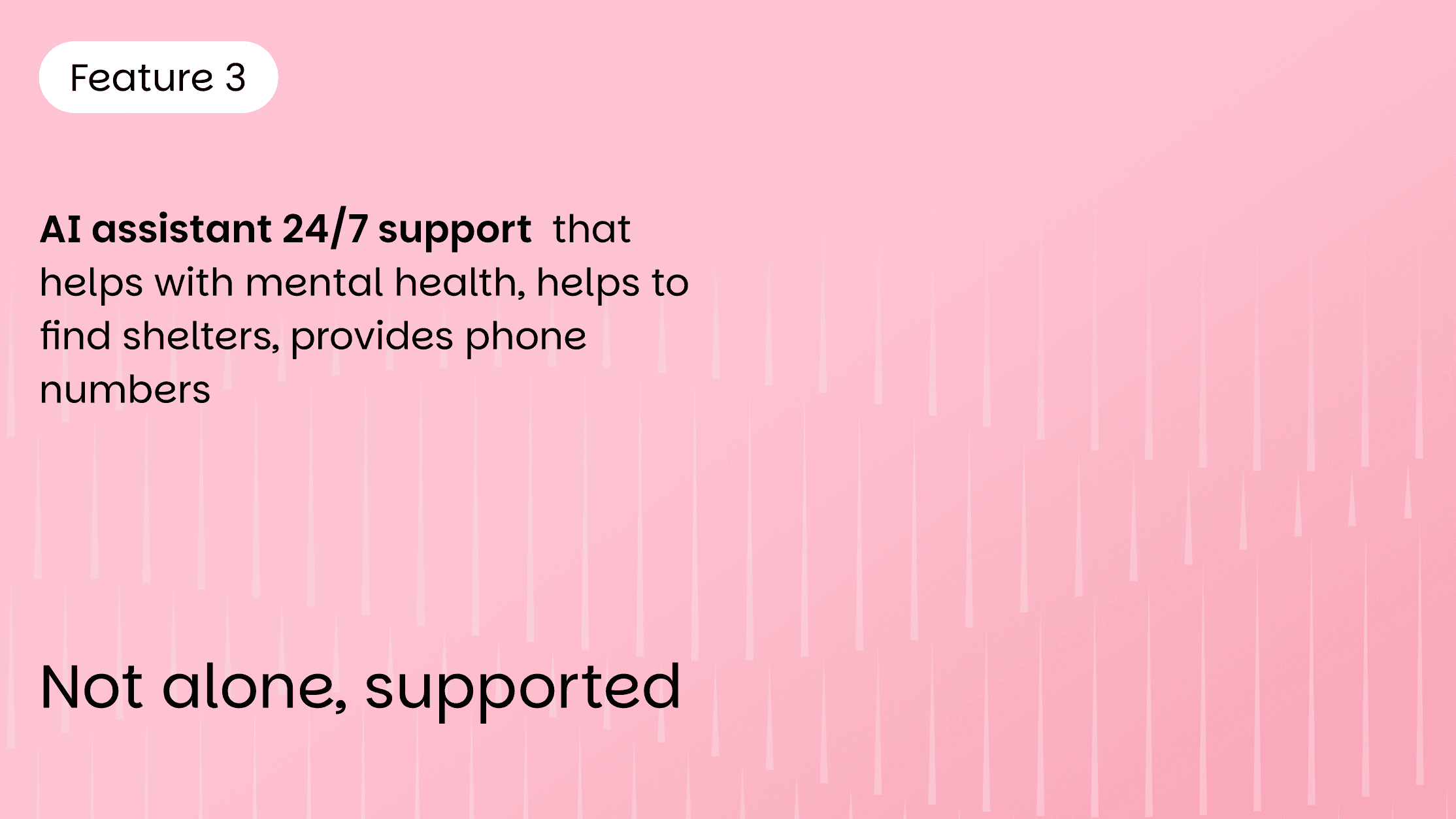
Feature 3: The third problem we uncovered was the loneliest one: she doesn't always have someone to talk to. Friends dismiss her and family blames her. And in the middle of the night at the stairs, there's no one to call.
A 24/7 AI assistant listens without judgment, helping her understand what's happening, because many victims don't even recognise their experience as abuse. It suggests local shelters, social services and emergency numbers, provides mental health support, and it continues collecting evidence quietly in the background, building her case over time. Chat history is saved to a secure cloud, keeping it out of reach of the abuser, even if he has access to her phone.
Reflections and learnings
What made this project different was where the ideas came from. We brought real stories from people close to us, and one small but powerful personal memory: the word "Fire," something all three of us were taught as children. That's what made the storytelling land.
This hackathon also shifted how I think about design as a discipline. Designers spend a lot of time solving narrow, product-level problems, but we can address systemic, global issues too.
If I had more that 10 hours, I'd push the prototype further: user testing, real interactions, a more detailed app flow. There are hard questions still unanswered: how do you connect an app to local police? How do you integrate with shelters and social services across different countries? How do you keep data truly safe? For now, S.H.E. lives as a concept, but it's a concept I believe in.