Research
Aviasales - UX research
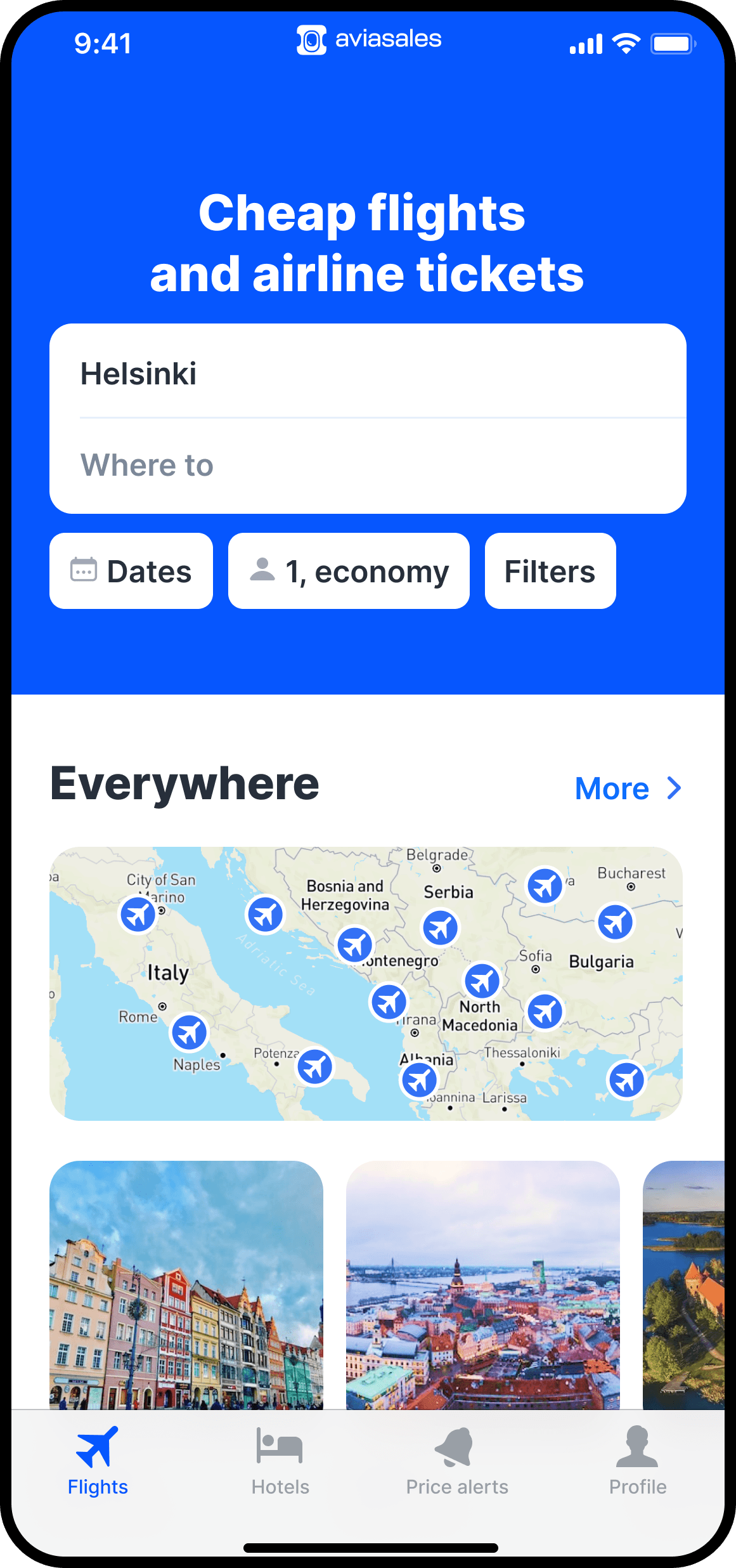
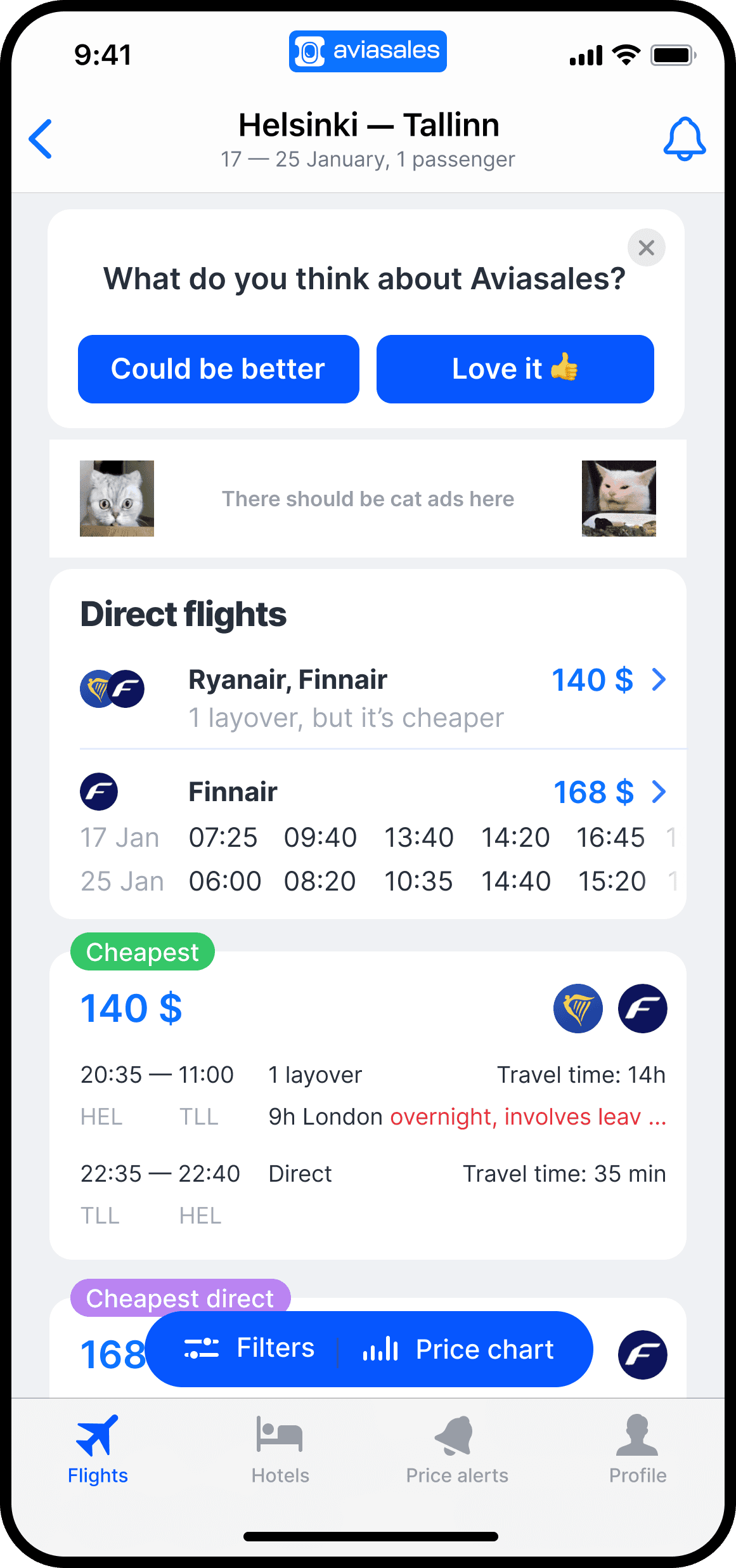
Aviasales is the leading travel metasearch engine in Eastern Europe and Central Asia, serving over 15 million users monthly across 14 countries

Results
Conducted 10 remote usability testing independently, identifying 15 usability issues in the app
Synthesised findings into a prioritised problem list and designed prototype solutions for the 4 highest-impact issues
Completed a full research cycle end-to-end — from recruitment and moderation through to solution design
My role
This was a self-initiated project to apply rigorous user research to a real product. Working under the mentorship of Alexey Belitsky, a product designer at Yandex, I chose Aviasales as the subject — a leading travel search app in Eastern Europe and Central Asia with a large, engaged user base.

Alexey Belitsky,
product designer at Yandex
Research process
I recruited 10 active Aviasales users and conducted remote interviews via video call. Alexey led the first session as a calibration point, after which I ran the remaining interviews independently. Across all sessions, participants consistently surfaced problems that assumption-based design would never have caught — confirming the value of going directly to users.
Problem findings
Across 10 interviews I identified 15 problems. The most significant:
Tapping "Buy" and being redirected to a partner's web view disrupted the flow and caused drop-off
Selection of provider invisible, so the user can't compare ticket price results from different providers
Switching from a round-trip to a one-way ticket was unclear and frustrating
Signing up felt pointless — users saw no benefit and no personalisation to justify it
Solutions
Of the 15 problems identified, I selected 4 to develop solutions for — chosen for their direct impact on ticket purchase conversion and user retention.
Problem 1: It's not clear what happens after clicking on “to buy” button and opening web view of partner’s company. Users leave the Aviasales app and goes to purchase a ticket directly from the found partner’s company.
Solution 1: If possible it might be a good solution to make partnership with companies allowing to make purchasing user flow completely seamless in the app
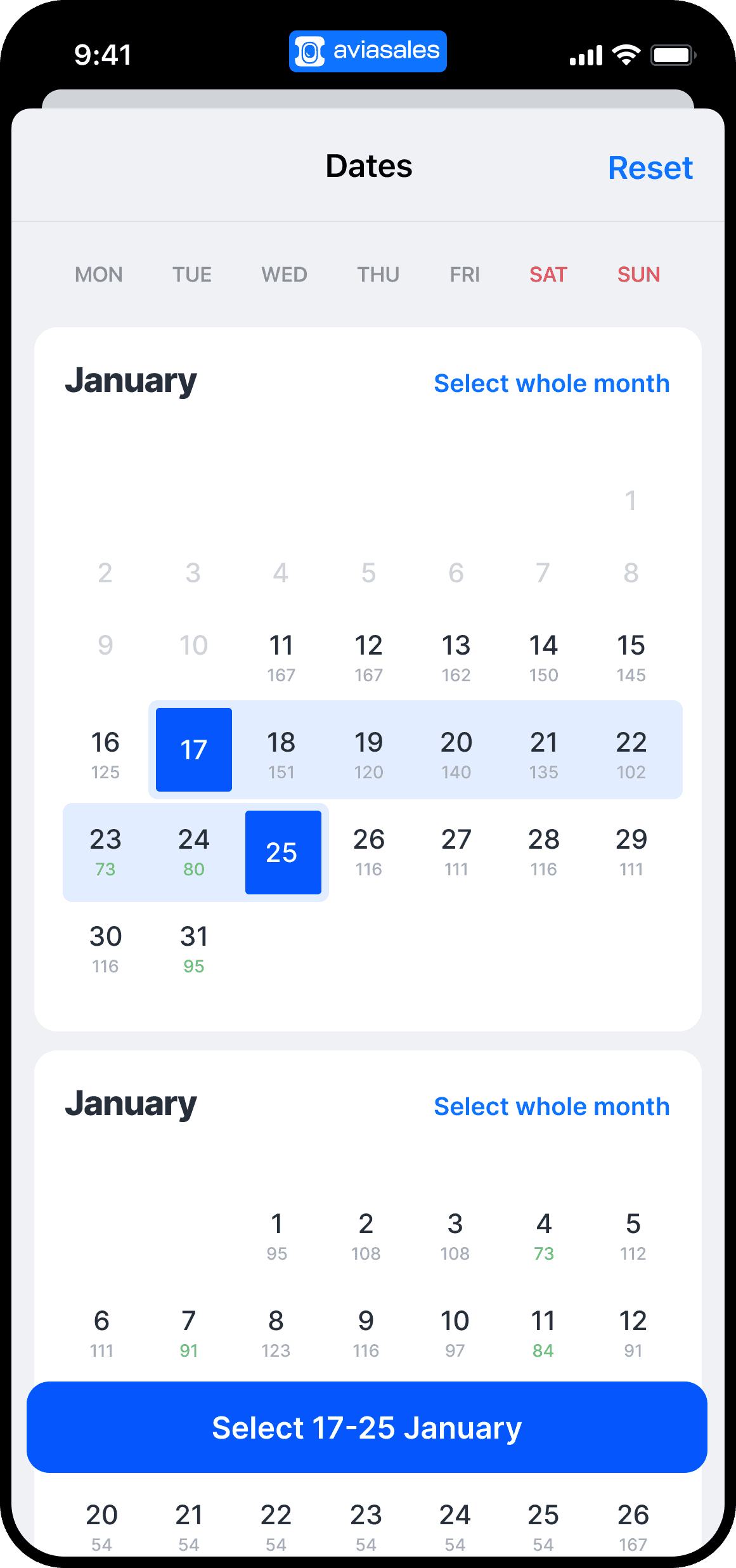
Problem 2: It is not clear how to choose a one-way ticket. People want to see a button for only one-way ticket when choosing a round-trip ticket
Solution 2: There are 3 options how to solve it: to add deleting one-way ticket to continue with one direction / to make dropdown to see one-way ticket options / to add option button for each one direction ticket
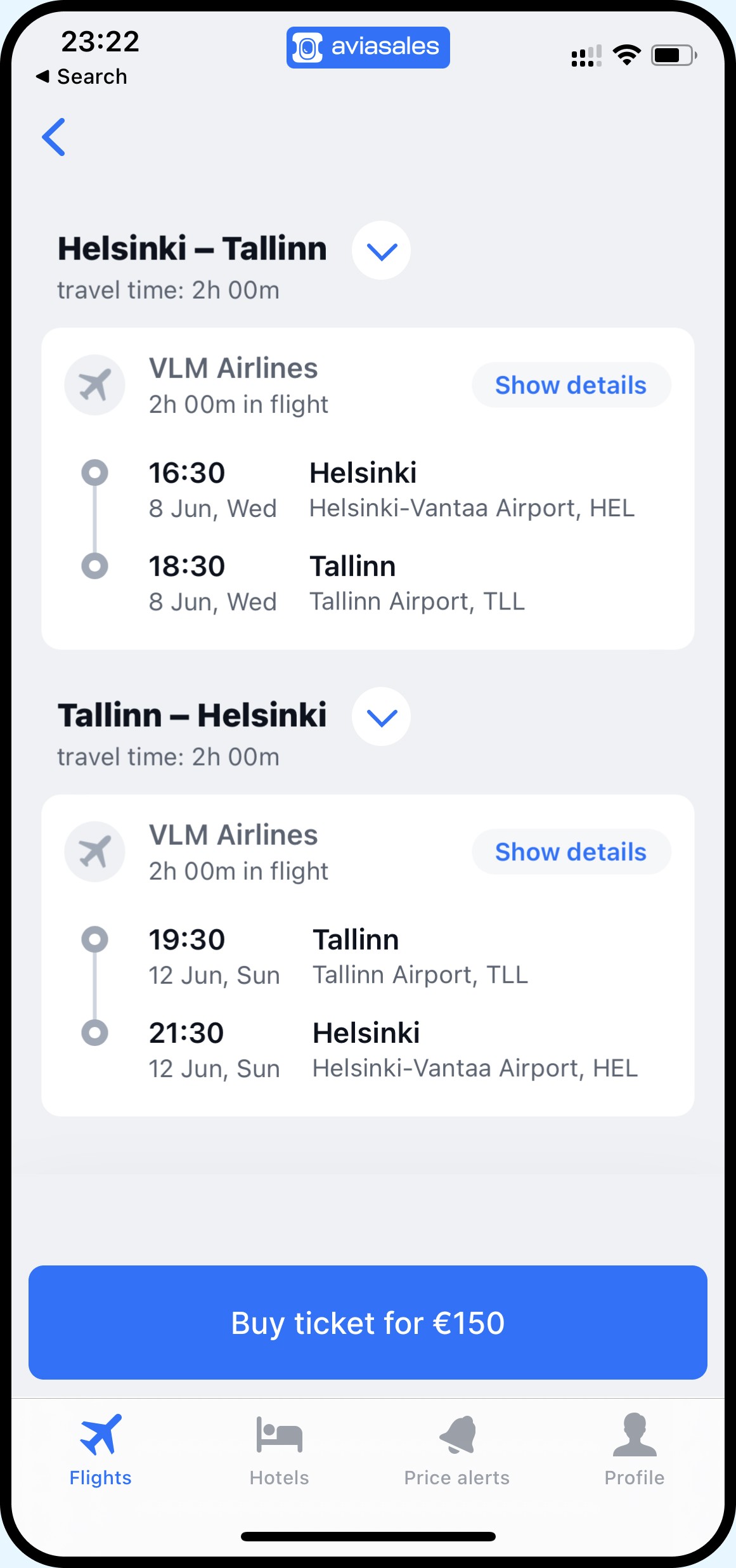
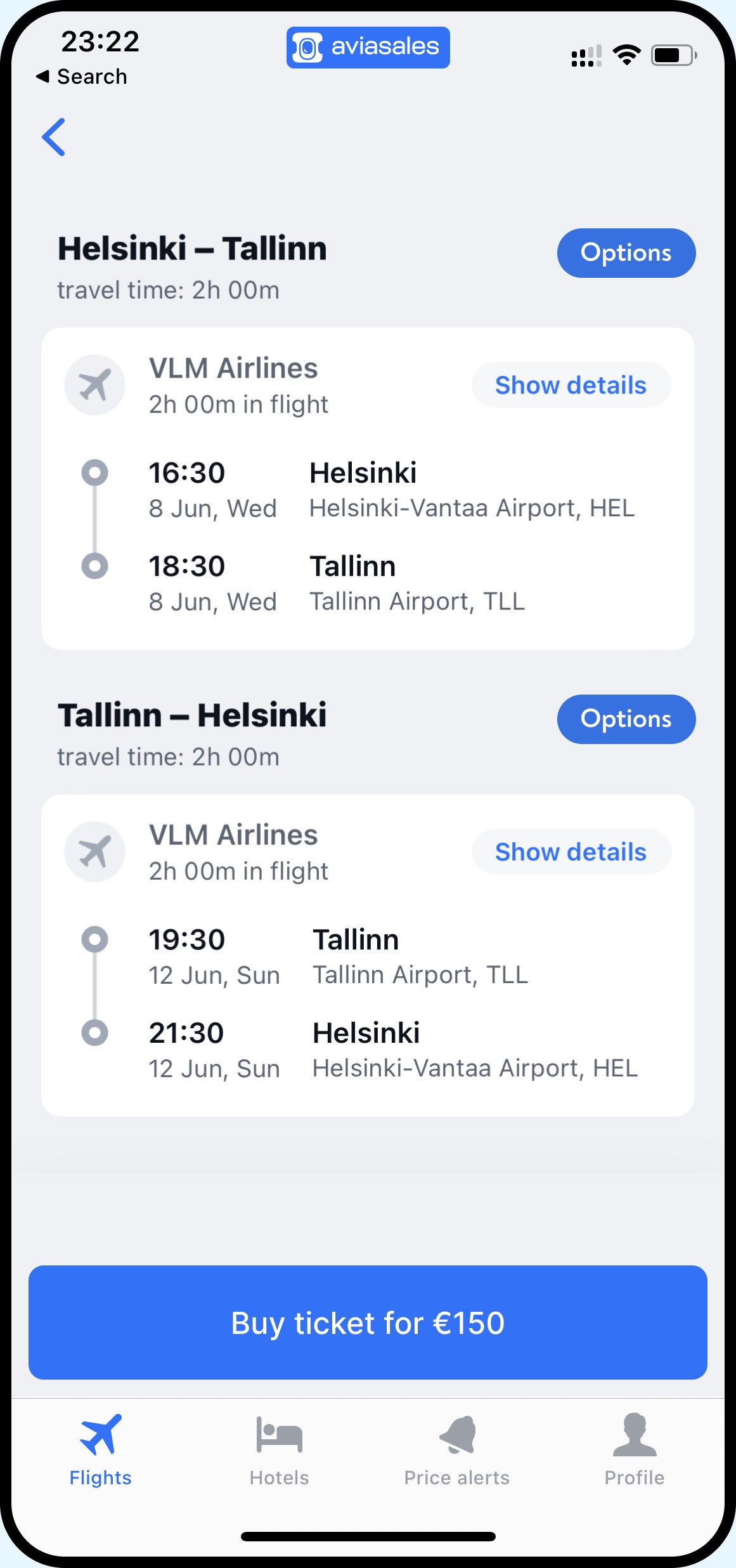
Problem 3: On the screen purchase screen, there is a function to select the provider company where the ticket is placed, but this function is invisible
Solution 3: 4 solutions are available: to add dropdown with provider's list / to add choosing link to the next page with list of providers / to add additional button for choosing provider / to use the major button for selecting provider company. The solutions can be tested and compared on A/B/n test.
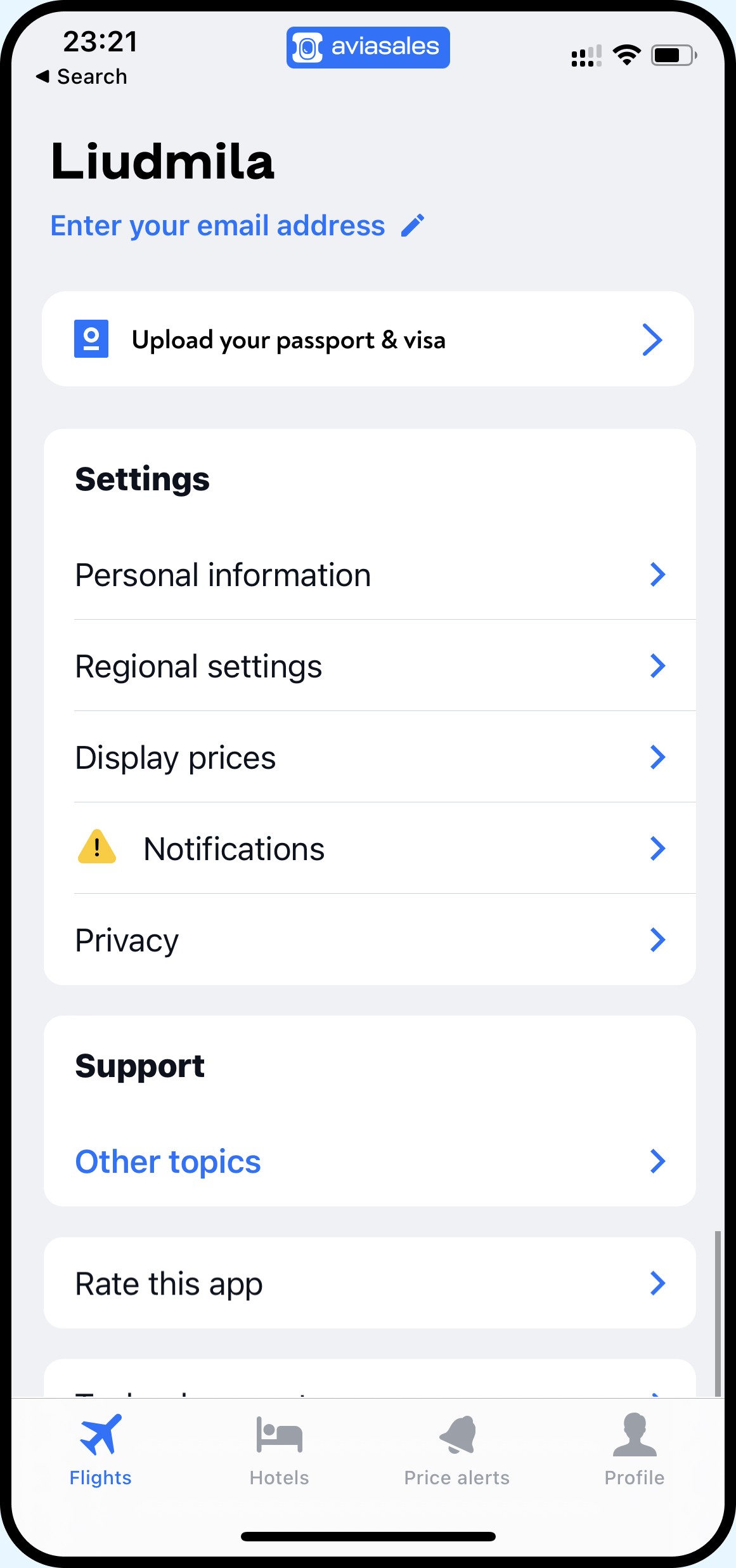
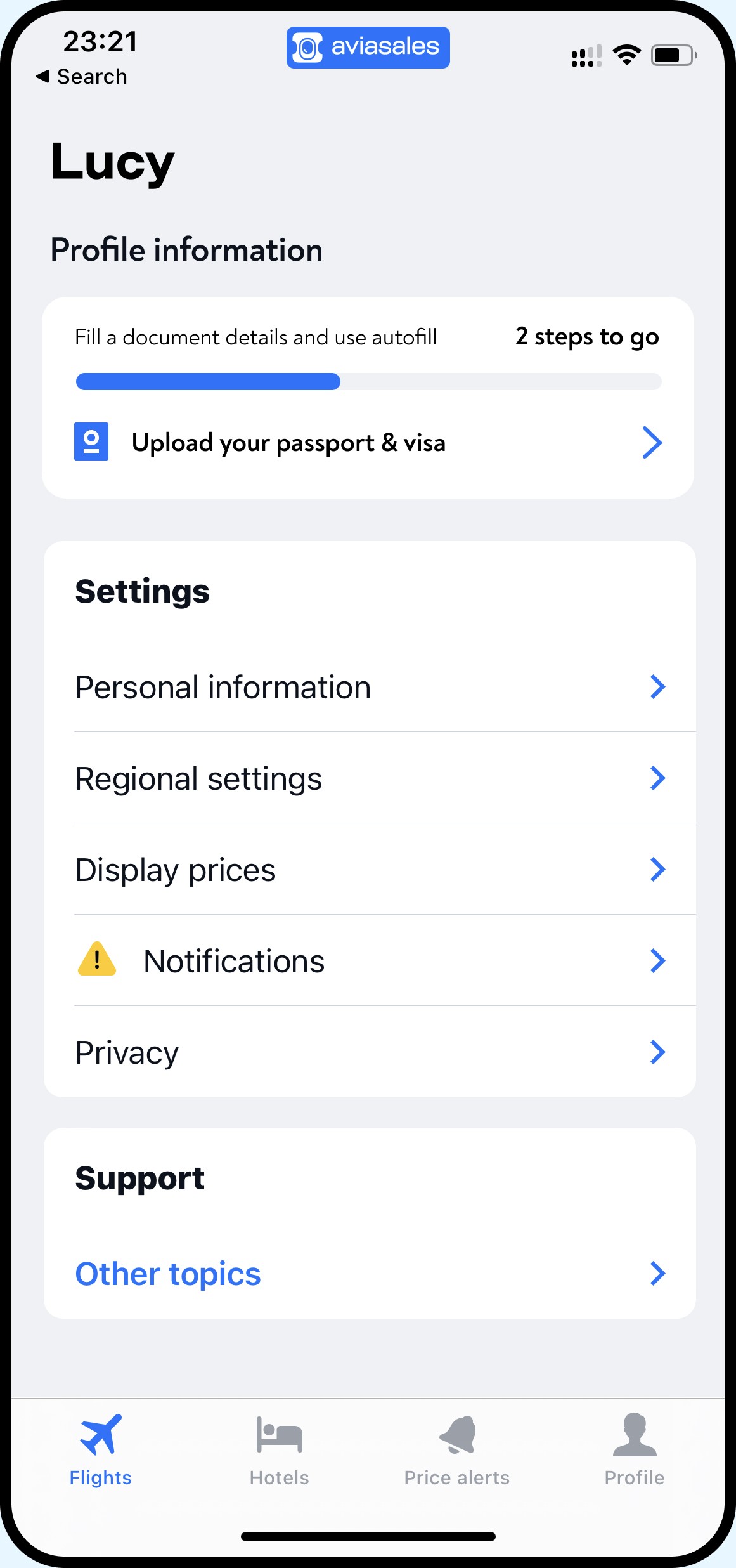
Problem 4: Signing up the app feels useless. There is not enough individual approach to the user. People want to see a bonus program or recommendations for travelling
Solution 4: The clearest approach to solving this problem is to add personalisation for the user. For example, by allowing users to save their document information for auto-filling when buying a ticket. It could be filling the document icon in profile / link to uploading passport information / or progress bar with suggested steps.
Next steps
The natural next step would be validating these solutions through A/B testing, focusing on purchase completion rate, one-way ticket selection frequency, and return visit rate as primary metrics. Each release cycle would include a short feedback round to measure impact before the next iteration.
Reflections
Conducting this study end-to-end — from recruitment through to solution design — reinforced how much a structured research process sharpens design decisions. The 15 problems I identified were almost entirely outside the scope of what visual or interaction design alone would surface. Research doesn't just validate direction, it reframes the problem scope, and that changes the product shape that follows.